Warsaw can surprise you on your very first walk. Alongside rebuilt townhouses and grand boulevards, you’ll find traces of war, uprisings and everyday life that are best understood on the ground. If you’re looking for things to do in Warsaw, Poland, this two-day plan combines classic landmarks with places where history truly takes center stage.
A short stay doesn’t have to mean rushing or superficial sightseeing. A well-planned route lets you see the key sights while also understanding why this city looks and sounds different from many other European capitals. The plan below is designed for travelers who want to combine the city’s atmosphere with its dramatic and fascinating past. It’s for visitors looking not just for views, but for the stories that give places their meaning.
The most interesting things to do in Warsaw, Poland on your first day
Your first day is best spent at the places that shape a basic picture of the city and show its continuity despite the destruction. This route works especially well if you’re visiting the capital for the first time and want to understand its layout, symbolism and main landmarks. Rather than ticking off attractions at speed, it’s better to move through them in a logical order: from the grand public spaces to the areas where the city’s historical layers are felt most strongly. That’s when it becomes easier to see that many places are not just a pretty backdrop for photos, but carriers of memory. For many travelers, these are the best things to do in Warsaw – not because they’re the most famous, but because they tell the city’s story most fully.
Old Town and the Royal Route
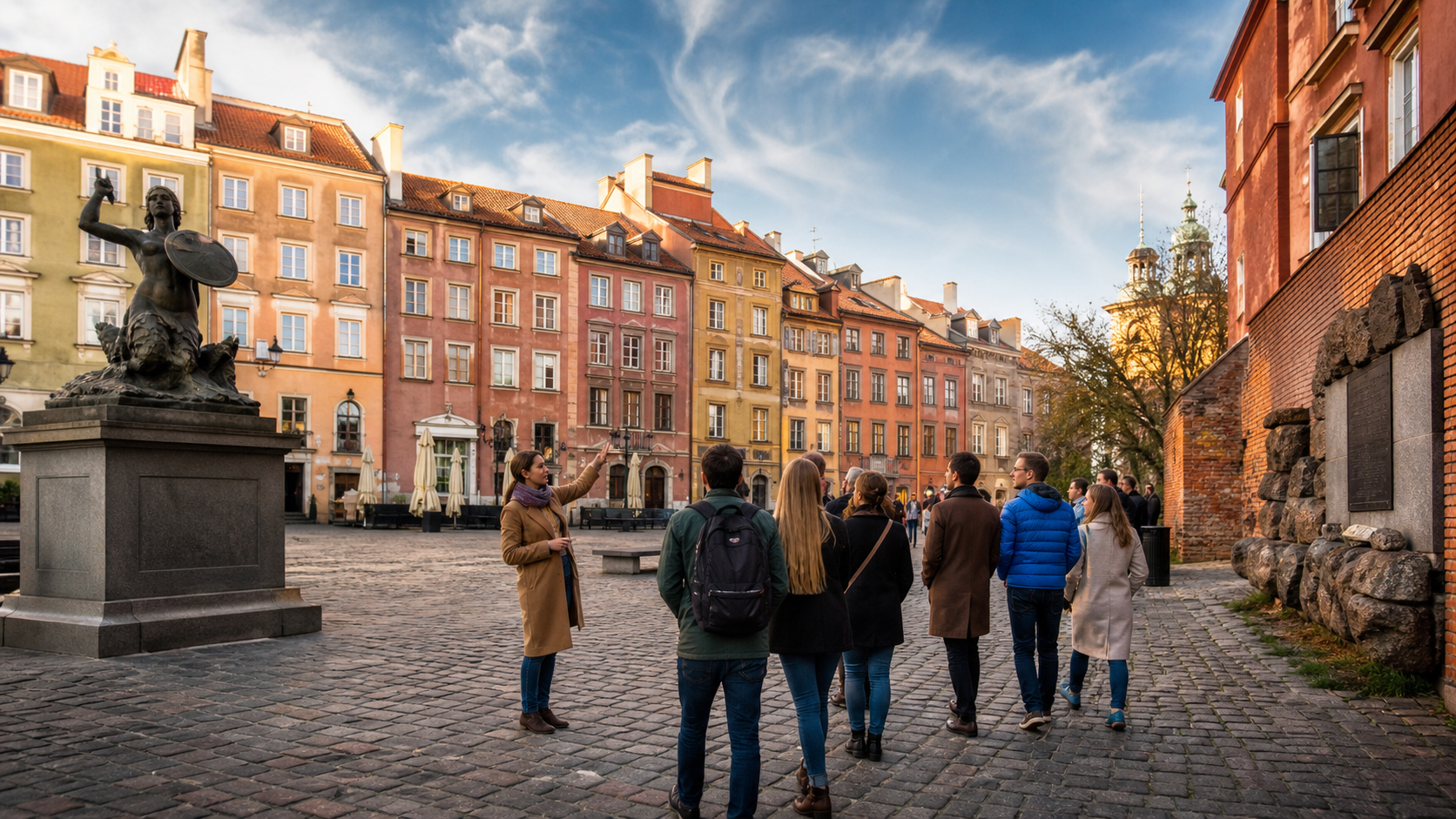
Start your sightseeing in the Old Town and continue toward the Royal Route. It’s a good entry point into the city’s history, because the rebuilt urban fabric is itself a testament to postwar determination. Your walk shouldn’t be limited to the Market Square and the most popular photo spots. Pay attention to the details of the facades, the street layout and the contrast between reconstruction and genuinely preserved fragments. This part of the city is best absorbed slowly, pausing at the monuments and squares that tie together royal, civic and modern threads. For visitors from abroad, it’s also a great moment to realize that the grand character of the city center doesn’t exclude a very personal history written into its architecture.
Places of remembrance and the city’s wartime context
After your first walk, move on to places that reveal more of the experience of war and occupation. In this part of the day, the point isn’t to check off sights, but to see how history has shaped the entire cityscape. A good approach is to focus on a few carefully chosen locations and give them more attention. If you’d like a structured narrative, a Warsaw Ghetto tour with a local guide can help you better understand the layout of the former ghetto and the significance of its surviving traces. This is one of those routes where a guide truly changes how you experience a place, because many important layers aren’t obvious at first glance. For those interested in 20th-century history, it’s often the most moving part of the entire stay.
How to pace your first day
To avoid sensory overload, take your first day at a walking pace, leaving room for observation and short breaks. The historic part of the city works best when you give yourself time to read the plaques, compare perspectives and notice the details. Three simple rules help when planning the day:
- Combine grand landmarks with places for reflection to keep your sightseeing varied.
- Don’t cut your stops too short, because the meaning of many places only reveals itself after a while.
- Leave room for spontaneous discoveries, since some of the most interesting spots lie between the main attractions.
This approach keeps the day from turning into a race, while giving you a solid foundation for exploring the city further. It’s also a good way to combine classic landmarks with a more personal experience of the place.
Day two in Warsaw for those who want to see more than the classic sights
Day two is worth devoting to deepening your perspective. Once the basic picture of the city is in place, it’s easier to appreciate less obvious locations and understand how the present intertwines with memory here. This is also when many visitors discover the more unexpected, and sometimes simply fun things to do in Warsaw – not necessarily entertaining in a lighthearted sense, but engaging, vivid and offering a real sense of connection with the place. A good second day doesn’t repeat the first; it builds on it with new layers: social, wartime and guided. This way, a short stay starts to come together as a coherent story rather than a collection of loose stops.
Traces of the ghetto and history written into the city
If day one sketched out the background, day two can focus on places that call for a more careful reading of the city. Traces of the former ghetto, monuments, fragments of walls and memorial sites don’t always form an obvious route for independent travelers. That’s exactly why context matters so much: without it, it’s easy to walk past places of enormous significance. Walking through these locations helps you better grasp the scale of the destruction, the tragedy of the residents and the postwar reconstruction. At the same time, it isn’t only a story of tragedy, but also one of memory, identity and the ways in which the city preserves its most difficult experiences. For many visitors, this is the most valuable part of their stay, because it stays with them longer than even the most famous panoramas.
When to choose a Warsaw tour guide
Not everyone needs a guide for their entire stay, but in some areas having one clearly improves the quality of sightseeing. This is especially true of historical routes, where the meaning of a place comes not from the view itself, but from the story, the chronology and the connections between sites. A good Warsaw tour guide helps you link facts to places and explains why a seemingly unremarkable street or square is key to understanding the city. A guide is especially useful when you’re short on time and want to avoid moving chaotically between attractions. In practice, a guide doesn’t just lead the route – they also bring order to the experience, making it easier to tell symbolic places apart from those that are merely popular. It’s a particularly sensible choice for those interested in World War II history and the city’s urban transformation.
2-day plan at a glance
If you want to organize your whole stay, a simple overview of priorities will help. This summary doesn’t replace the walk itself, but it makes decisions easier and helps you balance the classics with a deeper exploration of the city.
| Day | Main theme | Style of sightseeing |
|---|---|---|
| Day 1 | Old Town, the Royal Route, key landmarks | Historical introduction and city walk |
| Day 2 | Places of remembrance, traces of war, routes that need context | In-depth sightseeing, ideally with a guide’s narration |
This split works well for a short stay because it helps you manage your energy and keep a fresh perspective. Instead of trying to see everything, you focus on what truly defines the city’s character.
How to make the most of 2 days of historical sightseeing
Two days is enough to see the most important places and understand their significance at the same time, as long as the plan is coherent and based on real priorities. The best results come from combining a walk through the city’s most recognizable areas with a route that leads through its more difficult, yet extremely important layers of history. If you’d like a more structured experience, consider a private Warsaw tour, especially if you want to tailor the pace to your own interests. It’s a natural choice for those who would rather hear a local’s story than piece the city together from random information picked up along the way. This is exactly the approach Tour Guide Warsaw specializes in, offering historical and private tours for visitors looking for a deeper connection with the city. On a short stay in Warsaw, a well-guided route helps you see less but understand more.